
As brakes are an important part in your car, worn brake pads can harm your driving because it can create harder stopping. That’s why you need to know how to check brake pads to prevent unwanted problems. You can look at the thin pads, hear the unusual noises, or performance change.
Furthermore, recognising warning signs also matters to avoid risk, and you may need to know how much the replacement brake pad costs in Sydney.
What Are Brake Pads and Why Should You Check Them?
Everytime you hit the brake, brake pads press the brake rotors and slow your wheels until stopping your car. This is why the brake has an important role when you are driving. Brake pads can wear down over time, so you can’t ignore if the brake pads need replacing.
You need to check brake pads regularly to prevent damage to brake rotors and high cost of repairs. Besides, inspecting brake pads can maintain safe and reliable braking, and know when is the time to replace the brake pads.
How to Check Your Brake Pads Without Removing the Wheel
Many car owners think that checking brake pads needs to remove the wheel first. In fact, you can check without removing the wheel. Here’s how to do:
- Park your car on a flat surface. Then turn off and cool down the engine since it is very hot after driving
- Look at the round metal disc, namely the rotor behind your wheel.
- Check the thickness of the brake pad. If it looks very thin, you need to replace it soon. But, you can ask the mechanic if you’re unsure.
- Listen to unusual noises. Get it inspected to prevent further damage.
Warning Signs Your Brake Pads Are Worn
Before your brake pads are totally worn out, you need to be aware of common signs of worn brake pads. You may hear squealing noises when breaking. Then you need to hit harder and you may feel shaking when braking and it’s different from your usual braking. Or maybe your car moves to only one side when you hit the brake. Some vehicles are featured by the warning light about brake system problems. If the light is on, find the actual check. Moreover if you hear grinding sounds because metal parts could be rubbing one another and it’s a serious warning sign.
How to Check Brake Pad Thickness (and When to Replace Them)
If you want to check brake pad thickness, look at the friction material since it directly presses the rotor when you hit the brake. Look at these general thickness guidance to know when to replace:
- 10-12 mm: No need to replace fast
- 6-8 mm: Keep regular checks
- 4-5 mm: Plan for replacement
- 3-4 mm: get it inspected and replaced
- Below 3 mm: Need immediate replacement
To make sure the brake pads replace time, you can have a look at manual books as the vehicle manufacturer has different limits. Also, you can ask the mechanic to check the thickness and when to replace.
How Often Should You Check Brake Pads?
That will depend on your driving and the condition of your car. Your brake pads may wear out faster if you frequently drive in heavy traffic, frequent braking, and carry heavy loads. Front brake pads are usually the one worn faster because it has a bigger force on the braking system.
But, regular inspections can prevent unwanted problems early. You should check them at this particular time: during every regular service, before taking long trips, when replacing tyres, when you hear unusual braking noises, or change in braking performance.
Brake Pad Replacement Cost in Sydney
There is no fixed price for brake pad replacement cost in Sydney because it depends on your car make and model, the quality of brake pad, labour fees, and rotor condition. For estimation, brake pads only (per axle) cost around $250 – 450, including parts and labour. Performance brake pads (per axle) start from $500. Brake pads and rotors (per axle) start from $650. All four wheels (pads and rotors) around $1,200–1,400 or more, and rotor machining takes around $50–$100 per rotor.
Those figures are just an estimation. Always ask in advance at the workshop if you need to replace the brake pads.
Is It Worth Replacing Brake Pads on an Old Car?
It depends on the condition of your car. If it still has good performance, replacing brake pads is acceptable and can be an investment. But, if your car is old and has many problems like engine, transmissions, and other problems, brake pads replacement may become a new burden.
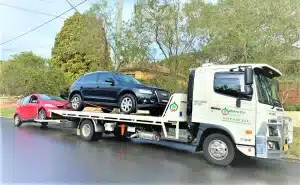
When you already considered many things, then got the answer that keeping or replacing the brake pads no longer make sense, it may be the time to remove your old car. Sell it to us as we offer cash for cars Sydney service. No need to fix your car before selling it. Contact us to get a free quote, free car removal, and instant payment on the spot.
Frequently Asked Questions
How do I check my brake pads?
Look at the rotor behind your wheel, check the thickness, and listen if there’s unusual noises. If you’re unsure about it, get it inspected by a reliable mechanic.
Can I check brake pads without removing the wheel?
Basically yes you can check it through the wheel spokes. But, the brake pads are difficult to see in some designs. Ask a mechanic to check the brake pads, but removing the wheel may need to do a thorough inspection.
How do I know when brake pads need replacing?
It is typically shown by some warning signs, like harder when hitting the brake pedal, thin pad brake pads material, and grinding. Don’t skip or ignore if one or more signs arise, unless you need to deal with the unwanted further problem.
How to Check Brake Pad Life
To know the current brake pad life, you can check the remaining thickness of the brake pad. Or when you service your car, ask the mechanic specifically about the brake pad.
How to Check Brake Pad Size
Need to buy a replacement brake pad? First you need to know its size. The brake pad size is different from one another, depending on the make, model, and the year your vehicle was produced. You can check on the manual book, or check through your VIN to identify suitable brake pads.
Final Thoughts
There are several easy ways to check your brake pads without removing wheels. First, look for the thin pads. Then hear if there are unusual noises. Also check if there’s any change in braking performance. Always be aware of the warning signs because brakes are a very important part in your vehicle.
Replacing brake pads makes sense if your car is still in good condition. But, if the repair bills keep rising, then it’s a sign to remove it. Turn your unwanted car into cash by contacting Metro Car Removal. We accept all vehicles in any condition, including damaged brake pads. We will assess your vehicle fairly and give you a competitive offer.